Istres Air Base: France's Conditional Support for US Refueling Jets, Not Iran Offensives
In a move that underscores the intricate balance of international alliances and national sovereignty, France has authorized the use of its strategic Istres Air Base by US military support jets. This decision, however, comes with stringent conditions: these aircraft are to be exclusively deployed for regional defense and humanitarian support, explicitly prohibited from participating in any US-Israel offensive operations targeting Iran. This nuanced position highlights France's commitment to its allies within NATO while firmly upholding its independent foreign policy and adherence to international law.
The authorization for US aircraft at the france base istres serves as a critical logistical arrangement, allowing vital refueling capabilities for operations in the broader Middle East. Yet, it simultaneously projects France's distinct stance on the volatile geopolitical landscape, particularly concerning recent military actions in Iran. French officials have been unequivocal, emphasizing that this is a routine NATO procedure, meticulously vetted to ensure compliance with French principles.
A Strategic Gateway: Istres Air Base and Its Role
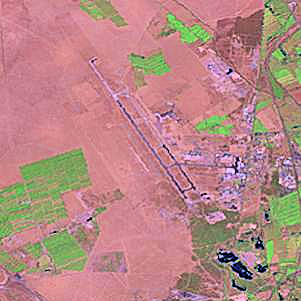
Located in the south of France, Istres Air Base (formally Base Aérienne 125 Charles Monier) is one of the French Air and Space Force's most significant installations. It serves as a crucial hub for strategic airlift, testing, and training, making it an ideal logistical point for operations extending into the Mediterranean and beyond. Its runways are among the longest in Europe, capable of accommodating a wide range of large military aircraft.
The recent greenlighting of US military support jets at france base istres is a testament to its strategic importance. Specifically, the aircraft accepted are operational support assets, primarily refueling tankers like the KC-135. These are not combat aircraft, a distinction explicitly made by French authorities. Their presence at Istres significantly extends the operational reach and endurance of other allied aircraft in the region, acting as airborne "service stations."
This operational support is vital for maintaining air superiority, surveillance, and rapid response capabilities across vast geographical areas. Without such refueling capacity, combat and reconnaissance aircraft would have severely limited operational windows, impacting mission effectiveness and safety. The ability to refuel in the air means fewer landings and take-offs, reducing wear on aircraft and crews, and enhancing continuous presence.
France's Principled Stance Amid Regional Tensions
The authorization for US jets at Istres must be understood within the broader context of escalating regional tensions. French President Emmanuel Macron had earlier condemned US-Israel military offensives in Iran, stating they were conducted "outside international law." This firm declaration set the stage for France's subsequent conditional support. The message from Paris is clear: alliance cooperation is paramount, but not at the expense of international legal norms or French diplomatic principles.
French Defence Minister Catherine Vautrin reiterated this position, clarifying that "a refuelling aircraft is a service station, it is not a fighter jet." This analogy succinctly captures the essence of the authorization: it is about enabling defensive posture and logistical support, not facilitating offensive combat operations. The French General Staff confirmed that they had obtained "full guarantees" that the US assets would "in no way take part in the operations conducted by the United States in Iran, but strictly in support of the defence of our partners in the region."
Minister Delegate to the Defence Minister Alice Rufo further elaborated that "this is a routine procedure within the framework of NATO" but stressed that France "systematically verify" the deployment's purpose. She affirmed that the aircraft refuelling at Istres were indeed for the "defence of the Gulf countries and not for American offensive action." This meticulous verification process is a cornerstone of France's approach, balancing its role as a key NATO ally with its independent foreign policy.
For more detailed information on France's specific conditions, you can refer to France's Istres Air Base Hosts US Jets with Strict Iran Strike Guarantees, which delves deeper into the stipulations placed on US operations.
NATO Protocol and Regional Defence Commitments
The allowance for US jets at france base istres is described as a "routine procedure within the framework of NATO." While NATO protocols facilitate interoperability and mutual support among member states, they also respect national sovereignty. This means that while allied nations often provide access to their bases, the host nation retains the right to impose conditions on the use of those facilities, especially when operations might diverge from national foreign policy objectives.
France is bound by various defence agreements with key partners in the region, including Qatar, Kuwait, and the United Arab Emirates, alongside "strong commitments with Jordan and Iraq." These nations have faced threats and even strikes from Iran, making France's commitment to their defense particularly relevant. The deployment of French assets, such as the Charles de Gaulle aircraft carrier to the Mediterranean and Rafale aircraft to the Emirates (where French bases were reportedly targeted by Iran, though intent remains unclear), underscores this commitment.
This dual approach—providing logistical support to allies while simultaneously reinforcing its own regional defensive posture—demonstrates France's complex and active role in securing stability in a volatile part of the world. It’s a testament to the fact that alliance cooperation can be flexible and nuanced, adapting to evolving geopolitical realities without compromising core national values. For a broader understanding of this dynamic, explore NATO Protocol: France's Conditional Support for US Military at Istres Amid Tensions.
The Logistics of Support: What Arrived at Istres
According to flight-tracking services, several US KC-135 Stratotanker refueling aircraft arrived at Istres Air Base. These strategic tankers, typically based at locations like Rota, Spain, are the backbone of the US Air Force's aerial refueling capabilities. Their ability to transfer thousands of gallons of fuel to other aircraft mid-air dramatically extends operational ranges, allowing missions to be conducted further afield and for longer durations.
A typical KC-135 can carry over 200,000 pounds of fuel and can offload a significant portion of that to receiving aircraft, enabling bombers, fighter jets, and transport aircraft to complete missions that would otherwise be impossible. For instance, a fighter jet's combat radius can be doubled or even tripled with just one refueling. This makes the KC-135 an indispensable asset for power projection and maintaining persistent presence over conflict zones.
The arrival of these tankers at france base istres therefore signifies an enhancement of US and allied operational flexibility in the region, purely for defensive and support purposes as per French stipulations. This setup ensures that while France doesn't directly endorse or participate in offensive actions against Iran, it facilitates the broader defensive posture and logistical resilience of its NATO partners in a volatile theatre.
Navigating Geopolitical Complexities: French Concerns and Future Outlook
While the French government maintains its principled stance, the decision to host US jets has not been without its critics at home. Left-wing politicians have voiced concerns that France risks being drawn into a broader conflict, underscoring the delicate tightrope walk required in international relations during times of heightened tension. The government's assurances, backed by strict guarantees, aim to alleviate these fears by clearly demarcating France's role.
This situation exemplifies the complexities faced by allied nations when individual foreign policy objectives diverge, even within a unified framework like NATO. France's actions demonstrate a commitment to both collective security and national autonomy. It's a calculated move to support allies' defensive capabilities while clearly distancing itself from actions it deems inconsistent with international law.
The future outlook for such arrangements will likely depend on the evolving situation in the Middle East. Should tensions subside, or should the nature of US operations change, the conditions governing the use of france base istres could also be re-evaluated. For now, France's approach sets a precedent for how NATO allies can maintain cooperation while safeguarding their independent foreign policy and legal principles.
In conclusion, the authorization for US refueling jets at France's Istres Air Base represents a carefully calibrated diplomatic and military maneuver. It underscores France's commitment as a NATO ally, providing crucial logistical support for regional defense, while simultaneously reinforcing its distinct and principled stance against offensive military actions conducted outside international law. The stringent conditions placed on the use of france base istres ensure that this strategic facility remains a cornerstone of defensive operations, rather than a launchpad for broader offensives against Iran.